Sofia Stoica
Hi! I am a computer science undergraduate at the University of Illinois Urbana-Champaign. I learn with the goal of building models and systems that better understand the world.
My research focuses on improving vision language model's localization and interpretation of fine-grained or damaged visual objects in images to build technologies robust in unpredictable or safety-critical environments. Currently, I am part of Heng Ji's Blender Lab, where I research how models select and represent visual information, how they recognize objects under physical degradation, and how reinforcement learning can strengthen the connection between perception and reasoning.
However, my love for learning has fostered exploration and collaborations in areas ranging from data generation synthesis to systems. I am working with Dilek Hakkani-Tur Conversational AI Lab to investigate acquisition-guided data synthesis; Fan Lai's GAEA lab to investigate semantic warm-starting for audio diffusion, and Argonne National Laboratory × NVIDIA to investigate improved policy gradient methods for post-training diffusion models for metal–organic framework generation.
If any of these topics sound interesting, I would love to connect!
Updates
Two papers accepted to NeurIPS 2026!
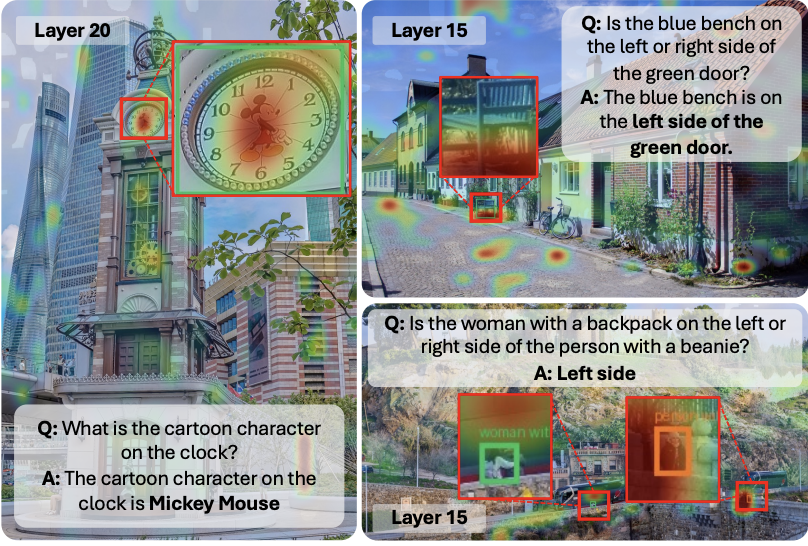
🔀 MoL dynamically selects query-relevant vision layers, improving fine-grained visual reasoning by up to 18.9%.
🔥 FRM recovers pristine-aligned features from physically degraded objects, improving retrieval, material recovery, description generation, and functional reasoning by 12–20% on average.
One paper accepted to ICLR 2026!
👁️ PAPO strengthens visually grounded reasoning with a perception-aware policy objective, improving multimodal reasoning by 4.4–17.5% overall and reducing perception errors by 30.5%.
Selected Publications
* Equal contribution
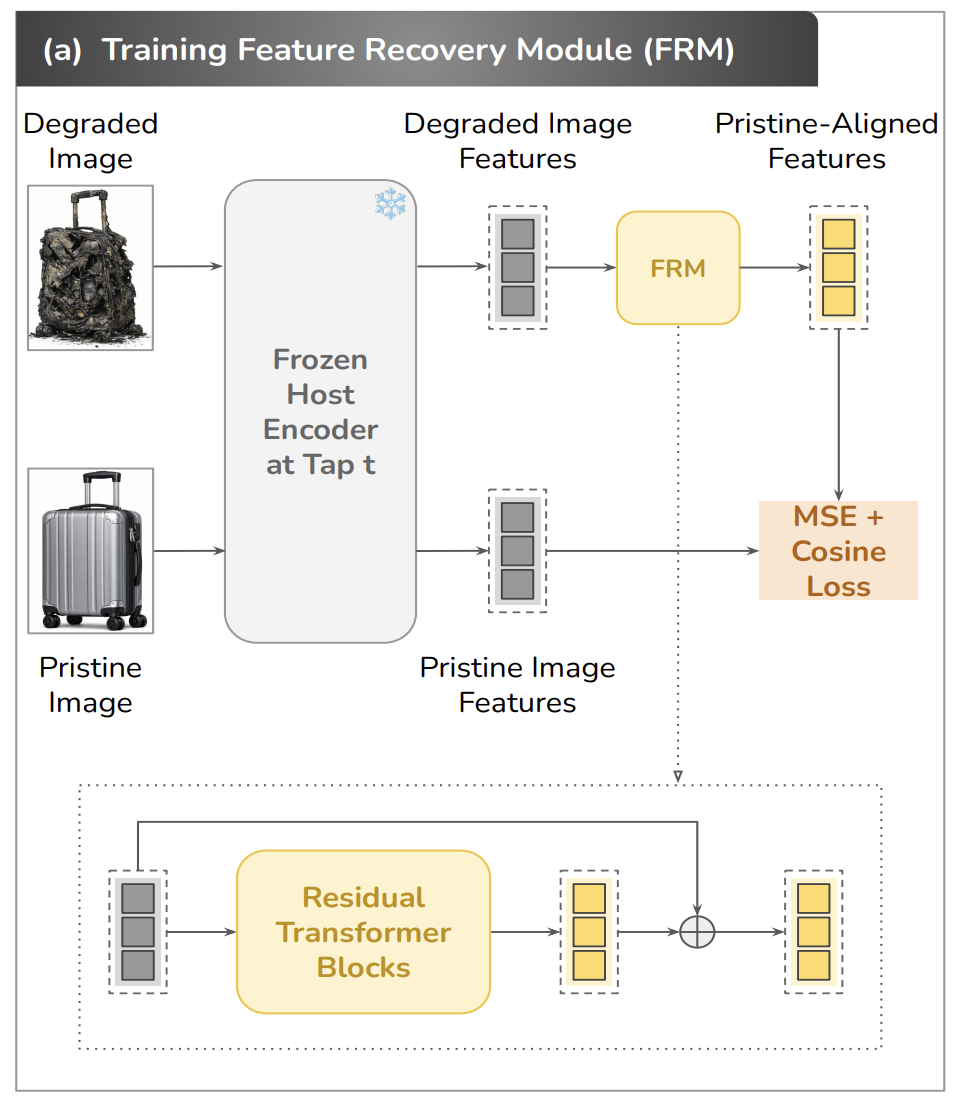
Feature Recovery for Fire-Damaged Object Understanding
NeurIPS 2026
Recovers pristine-aligned features from physically degraded objects, improving retrieval, material recovery, description generation, and functional reasoning by 12–20% on average.
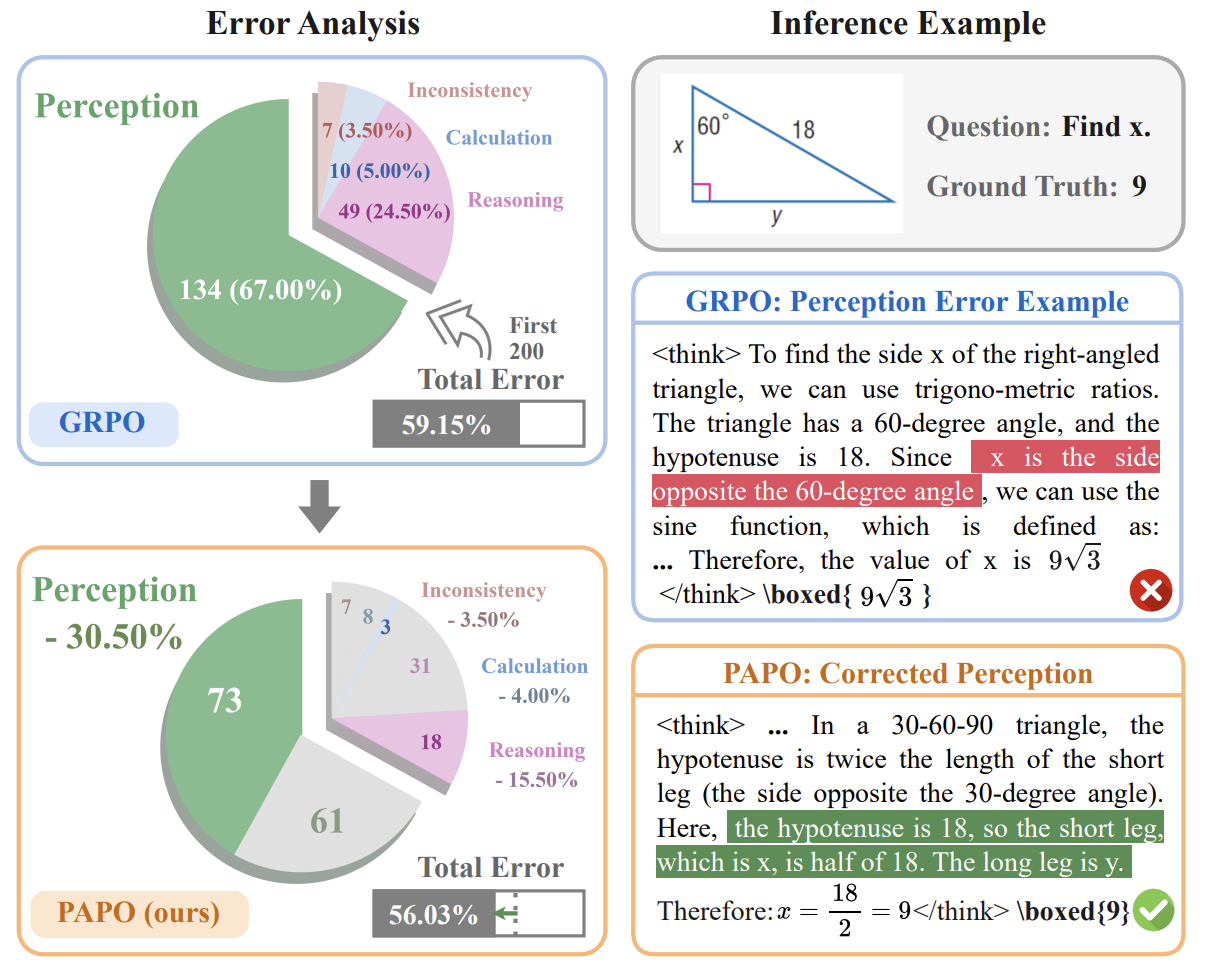
Perception-Aware Policy Optimization (PAPO) for Multimodal Reasoning
ICLR 2026
Encourages visually grounded reasoning by integrating an implicit perception loss into reinforcement learning, improving overall gains of 4.4–17.5%, rising to 8.0–19.1% on tasks with high visual dependency, while reducing perception errors by 30.5%.